



Diabetes Mellitus Rehabilitation Programme

What is Diabetes Mellitus?
Diabetes Mellitus (DM) is a condition in which an individual’s blood glucose level is abnormally elevated. It occurs when the body either cannot produce enough insulin (a hormone that regulates blood glucose) or use the insulin it produces effectively.
There are 2 main types of diabetes:
Type 1 diabetes
a lifelong condition in which the body's immune system is attacked and the cells that produce insulin are destroyed.
Type 2 diabetes
the body does not produce enough insulin, or it does not react to the hormone properly.
Type 2 diabetes is far more common than type 1. It accounts for more than 90% of the cases.
-Fasting Glucose | ||||
| < 5.6 mmol/L | 5.6 – < 7 mmol/L | ≥ 7 mmol/L | ||
| 2 Hours after Meal | < 7.8 mmol/L | Normal | Impaired Fasting Glucose | Diabetes |
| 7.8 – < 11.1 mmol/L | Impaired Glucose Tolerance | Impaired Glucose Tolerance | Diabetes | |
| ≥ 11.1 mmol/L | Diabetes | Diabetes | Diabetes | |

Complications of DM
- Nerve damage occurs in diabetic patients, leading to poor conduction of the nerves. This affects how they see, hear, feel and move. It also affects patients’ balance ability and makes them prone to falls that can result in serious injuries.
- High blood sugar levels for long periods of time can damage the blood vessels, which can lead to heart attacks and strokes.
- The tiny blood vessel clusters (glomeruli) that are responsible for filtering in the kidney can be damaged in diabetic patients.
- Blood vessels in the eye can be damaged. This could lead to blindness.
- Diabetic patients usually have foot complications, caused by nerve damage and poor blood flow.
- Bacterial and fungal infections are more likely to occur in diabetic patients.
- Damage to the nerves and blood vessels can cause erectile dysfunction in men.

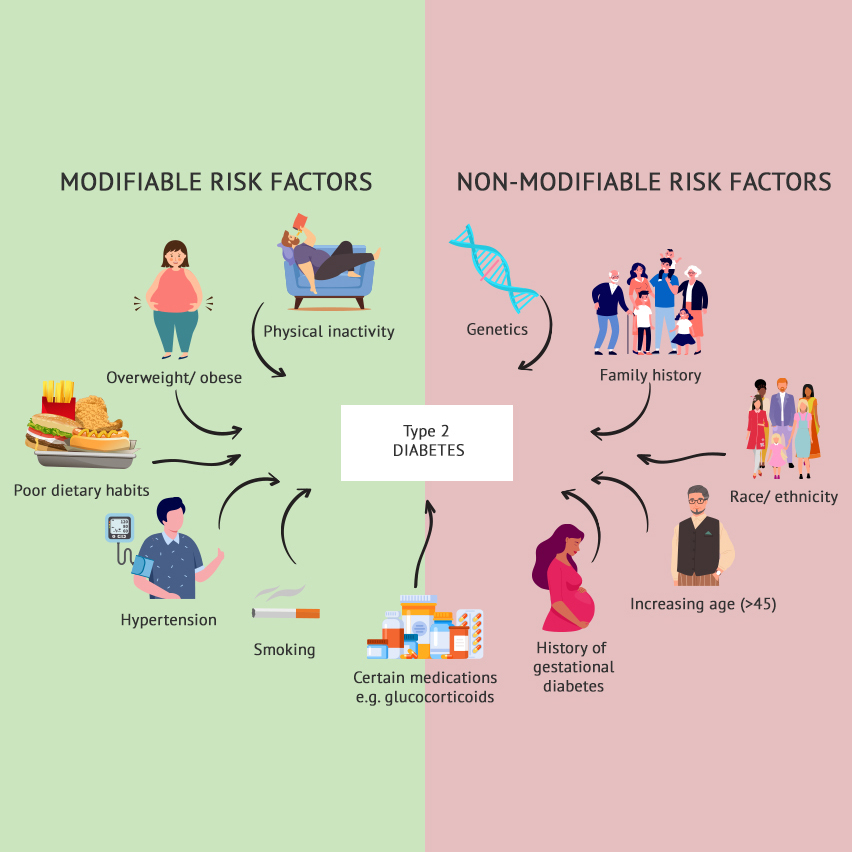
What causes DM?
Keys to diabetes management
- Exercise
- Education
- Diet
- Medication
- Communication
The effects of exercise on diabetes
- Even one workout session can improve blood glucose and insulin sensitivity up to 24 hours or longer.
- To obtain a long term effect, the American College of Sports Medicine (ACSM) recommends a gradual build-up of exercise to at least 150 to 300 minutes per week of moderate intensity, or 75 to 150 minutes per week of vigorous aerobic intensity. It also recommends 2 to 3 days per week of moderate to high intensity resistance training.

Aerobic Exercise Recommendation
We recommend at least 150 minutes per week of moderate-intensity activity (e.g. brisk walking or light cycling) or vigorous activity (e.g. jogging or hiking) to improve your body stores and consumption of glucose, stamina and cardiac function.
What?
Any rhythmic continuous activity
How often?
3 - 7 days per week
How hard?
Fairly light to somewhat hard
How much?
Start with a few minutes then gradually build up to 30-60 minutes a day
Tips:
- Stay active as best as you can.
- Start with a 5 or 10 minute workout, followed by gradual progression to 20–30 minutes.
- If you want to lose weight, double the length of your workouts.
When doing aerobic exercises:
- Start with light- to medium-effort activities
- Increase your pace and exercise duration gradually
- Warm up and cool down before and after exercising

Strength Training
It is important for people with diabetes to build up their muscles for better blood glucose control. It can also promote your functional capacity by making daily activities easier and safer.
What?
- Hand weights, resistance bands, weight machines or your own body (e.g. a kitchen counter for push-ups or chair squats)
How often?
2-3 days/week
Rest day in between
How hard?
Start with light effort. Build up to medium or hard effort
How much?
10–15 repetitions to start (for each major muscle group). Build up to 8–10 reps of challenging effort
Tips: To exercise correctly and safely, consult a certified exercise professional when necessary.
Tips for strength training:
- Progress slowly and gently
- Breathe properly when lifting to avoid raising your blood pressure
- Don’t lift heavy weights if you have severe diabetic retinopathy
Benefits of a Physiotherapy Programme:
- We provide a thorough examination to understand your past medical history, strengths and weakness
- We will do a submaximal exercise test to learn about your physical status so we can tailor the most suitable and safest programme for you
We may use Tanita® BIA monitor to understand changes in your body composition throughout the
programme
- Education is an essential part of our programme
- We teach patients how to self-monitor blood pressure, determine their target heart rate and glucose level, and use Rate of Perceived Exertion (RPE) for safe and effective training

Fall Management
Our programme also includes
• Fall risk assessment
• Walking aid prescription
• Balance exercise
• Proprioceptive training
• Foot sensation test and education
- Bioelectrical Impedance Analysis
- Submaximal Treadmill Test
- Jogging
- Swimming
- Free weights
- Strength training machines
- Tailor-made
- Self-monitored
- Fall risk assessment
- Exercise
- Monitoring blood pressure during exercise
- Other related issues
| - | Day 1 | 1st Week | 1st Month | 3 Months |
| Assessment | ✓ | ✓ | ||
| Aerobic and Resistance Training | ✓ | ✓ | ✓ | ✓ |
| Balance Training | ✓ | ✓ | ✓ | ✓ |
| Education | ✓ | ✓ | ✓ | ✓ |
References
- Hospital Authority: https://www21.ha.org.hk/smartpatient/spw/zh-hk/disease-information/disease/?guid=c73a0386-fe66-42eb-a979-7619ac8359da
- Mayo Clinic: https://www.mayoclinic.org/diseases-conditions/diabetes/symptoms-causes/syc-20371444
- American College of Sports Medicine (ACSM): https://www.acsm.org/news-detail/2022/02/09/acsm-publishes-new-recommendations-on-type-2-diabetes-and-exercise