



Hypertension

Blood pressure is the pressure that the blood gives to the artery walls. It is measured using 2 numbers:
- Systolic blood pressure measures heart beats.
- Diastolic blood pressure measures heart rests between beats.
Normal blood pressure level is below 120/80 mmHg.
There are 5 categories that is recognised by the American Heart Association:
| Blood Pressure Category | Systolic BP (mmHg) | - | Diastolic BP (mmHg) |
| Normal | < 120 | and | < 80 |
| Elevated | 120–129 | and | < 80 |
| High Blood Pressure (Hypertension Stage 1) | 130–139 | or | 80–89 |
| High Blood Pressure (Hypertension Stage 2) | ≥ 140 | or | ≥ 90 |
| Hypertensive Crisis (consult your doctor immediately) | > 180 | and/or | > 120 |
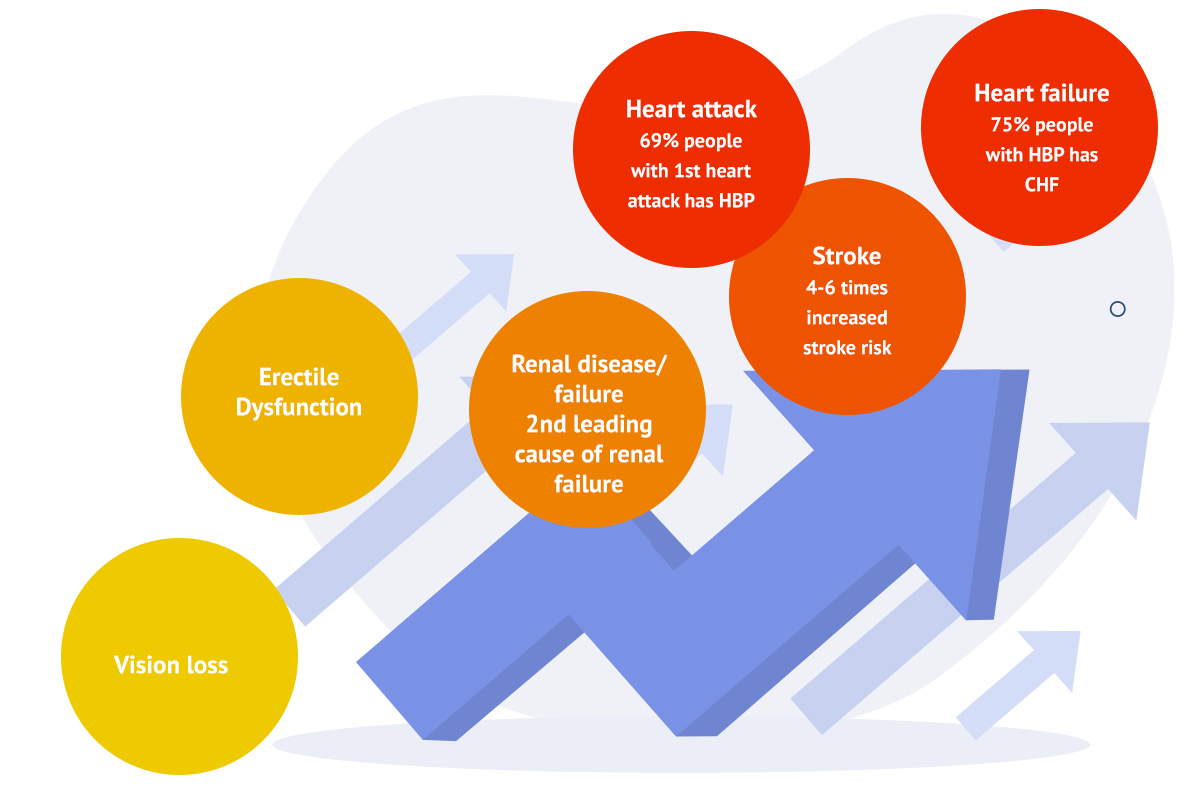
- It increases the risk of stroke in the brain
- It can lead to heart failure and heart attack
- It is associated with memory loss and dementia caused by narrowed or blocked arteries
- It causes vision loss
- It leads to renal failure
- It causes sexual dysfunction
Hypertension Treatment

Getting Started with physiotherapists
Working with an exercise professional can help you learn
- The right way to do exercises
- How to breathe properly
- Reach your fitness goals
- Tailor exercises to your abilities
- Most importantly, how to MINIMISE YOUR RISK OF INJURY
Assessment
- Bioelectrical Impedance Analysis
Submaximal Treadmill Test
Aerobic exercise
- Jogging
- Swimming
Resistance training
- Free weights
- Strength training machines
Home exercise
- Tailor-made
- Self-monitored
Education
- Monitoring blood pressure during exercise
- Other related Issues
| - | Day 1 | 1st Week | 1st Month | 3 Months |
| Assessment | ✓ | ✓ | ||
| Aerobic and Resistance Training | ✓ | ✓ | ✓ | ✓ |
| Balance Training | ✓ | ✓ | ✓ | ✓ |
| Education | ✓ | ✓ | ✓ | ✓ |
References
- American College of Sports Medicine. 2021. ACSM information on... Exercising Your Way to Lowering Your Blood Pressure.
- American College of Cardiology. Blood pressure thresholds for initiation of blood pressure–lowering therapies in the 2017 ACC/AHA and 2018 ESC/ESH blood pressure guidelines.
- Exercise is Medicine Australia. http://exerciseismedicine.com.au/wp-content/uploads/2021/04/EIM-FactSheet_Hypertension_2020.pdf
- NHS. https://www.nhs.uk/conditions/high-blood-pressure-hypertension/treatment/
- https://www.counterweight.org/blogs/articles/modifiable-and-non-modifiable-risk-factors-for-hypertension

How can exercise help?
Systolic blood pressure and diastolic blood pressure are expected to drop an average 5–7 mmHg among adults with hypertension with regular exercise (occurs immediately and can last for up to 22 hours). Over time, the benefits will last and become long term.
If systolic BP is reduced by 5 mmHg, death from strokes decreases by 14% and death from coronary heart disease decreases by 9%.

What kind of exercises are recommended?

Aerobic Activity
What?
- Any rhythmic continuous activity
How often?
- 5 – 7 days per week
How intense?
- Moderate Intensity
- 40-59% HRR
- RPE 12-13
- Feels hard but still able to talk
How much?
- Accumulation of 90-150 mins per week
To lose weight, aim for 225-240 minutes per week.
To gain maximum health benefits, try to do 30+ minutes per day.

Strength Training
What?
- Hand weights, resistance bands, weight machines or your own body (for example, kitchen counter push-ups or chair squat
How often?
2 – 3 days/week
*Rest day in between
How intense?
- Start with light effort. Build up to somewhat hard effort.
How much?
- Build up to 8 –12 reps of challenging effort for each major muscle group. Repeat 2 – 4 times
Avoid straining or holding your breath when lifting weights. This can cause large changes in blood pressure that increase your risk of passing out or developing abnormal heart rhythms.
For older individuals or novices, try to perform light weight lifting with more reps.