



Our IVF Programme, Step-by-Step
Couples should bring along records of any infertility workup they might have had, such as hysterosalpingogram (HSG) films, semen analysis reports, basal body temperature charts, previous operative records and laboratory test results.
Our gynaecologists/reproductive specialists will advise them on the programme, and some further investigations may be ordered to establish the cause of their problems, if not clearly known, or to help them decide on the most appropriate technique.
After a preliminary examination and investigation, the patient couple will undergo counselling offered by the attending doctor and nurses, in order to have an in-depth understanding of the meaning and procedures involved in reproductive technology. They will also learn about any complications that might be induced by the treatment as well as other choices such as adoption. If required, or if needed for certain reproductive technologies, patients will be referred to other doctors, clinical psychologists or lawyers for counselling. Patient couples will have sufficient time before making the decision.
Consent forms must be signed when the patient couple decides to take up treatment. A marriage certificate must also be presented before treatment begins.
If needed, professional consultation from clinical psychologists can be arranged.
IVF treatment usually begins with the use of hormones to induce egg production. Different hormone injections are available, and our doctor will choose the most appropriate one for the patients.
Natural cycle IVF or in vitro maturation technology may sometimes be used in certain clinical situations. Please talk to our doctor for details.
Ultrasound scans (USS) of the ovaries are done regularly to monitor the size of the follicles. At the time of egg collection, an additional injection (usually in the form of placental hormone (hCG)) is given to complete the final maturation step and release the eggs. Egg collection will be scheduled 34–36 hours after this injection.
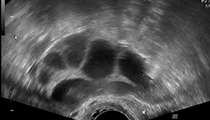
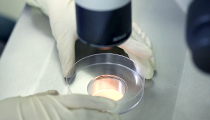
Collecting eggs is done through a process called Transvaginal Ultrasound-Guided Oocyte Retrieval (TUGOR). The doctor will pass a needle though the vagina to obtain the eggs under the guidance of ultrasound imaging. Once the eggs have been obtained, they will be immediately passed to the embryologist-in-charge for in vitro fertilisation and culture. The patient can leave the hospital in a few hours after the surgery.
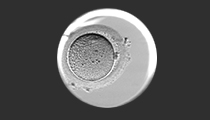
Egg with inclusions
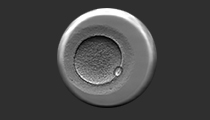
Normal looking egg
The husband will be asked to submit a sample of fresh semen on the day of egg collection. If you have a problem with semen collection or need to freeze a sample before the treatment cycle for backup, please contact our staff.
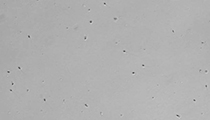
Sperm of low motility
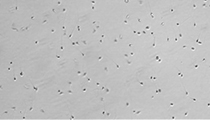
Sperm after washing
The fertilised egg cells begin to divide and become embryos. Our embryologists will monitor the embryonic development and choose the best embryo and best day for embryo transfer.

Related Technology
An incubator with a built-in camera for automated time-lapse imaging of fertilised oocytes in a safe incubation environment from fertilisation until the time of transfer.
Embryos are usually ready for transfer about 2–5 days following egg collection. They are placed into the uterus by means of a thin tube (catheter) through the neck of the womb (cervix). The procedure is similar to a routine gynaecological examination; it usually does not require anaesthesia. The patient may leave the hospital half an hour after embryo transfer.
Blood tests are performed to monitor progesterone levels following embryo transfer; and for evidence of pregnancy approximately 8–14 days later.


Happy Valley
- Address:
- 6/F, Li Shu Pui Block,
Hong Kong Sanatorium & Hospital,
2 Village Road, Happy Valley, Hong Kong
- Service hours:
-
Monday to Friday: 9:00 am to 5:00 pm
Satuday: 9:00 am to 1:00 pm
Closed on Sundays and Public Holidays
Consultation by Appointment
- Tel.:
- (852) 2835 8060
- Email:
- [javascript protected email address]
- Fax:
- (852) 2892 7541
- WhatsApp:
-
(852) 2835 8060
(For non-emergency cases)