


Spine
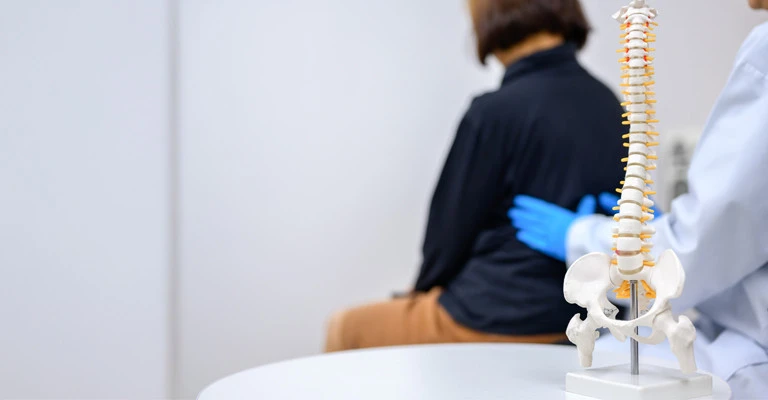
HKSH Spine Centre: integrated care for every spinal problem
The spine is much more than a column of bones. It is the central support structure of the human body, a protective channel for the spinal cord and nerves, and a dynamic system that allows people to stand, move, work, and live independently. When the spine is affected by disease or injury, the consequences can be far-reaching. Degenerative conditions, spinal deformities, tumours, infections, trauma, and other complex disorders may cause chronic pain, nerve compression, weakness, difficulty walking, or even loss of independence. For this reason, high-quality spine care plays an essential role in helping patients regain function and improve their quality of life.
The HKSH Spine Centre is dedicated to providing comprehensive, patient-centred care for a wide range of spinal conditions. Modern spine treatment is not limited to surgery. In many cases, symptoms can be managed effectively through non-operative methods such as physiotherapy, core strengthening, pain and anti-inflammatory medication, image-guided injections, lifestyle modification, and ergonomic advice. These approaches aim to reduce pain, improve mobility, strengthen supporting muscles, and help patients return to daily activities safely.
However, when symptoms persist despite conservative treatment, or when neurological function is threatened, surgery may become necessary. Surgical treatment may include decompression to relieve pressure on the nerves, stabilisation or fusion to restore spinal alignment and stability, correction of deformities such as scoliosis or kyphosis, or removal of tumours when appropriate. While the techniques may vary, the goal remains consistent: to restore spinal function, reduce suffering, and enable patients to live with greater comfort and confidence.
Given the high complexity of spine, every patient requires careful assessment and an individualised treatment plan. No two patients are exactly the same, as their conditions, symptoms, expectations, lifestyles, and treatment goals may differ significantly. A multidisciplinary approach is therefore important to bring together the expertise of different healthcare professionals and ensure the most suitable care for each patient. By matching the right treatment to the right patient, we are committed to achieving safer, more effective, and more meaningful outcomes.
Advances in technology have greatly transformed modern spine surgery. Navigation systems and robotic assistance can improve surgical accuracy, while intraoperative neuromonitoring can enhance safety by helping surgeons monitor nerve function during an operation. Three-dimensional printing for surgical planning, and more advanced instruments, equipment, and implants can reduce surgical trauma. When these innovations are used appropriately with prudence, patients may attain faster recovery, and satisfactory clinical outcomes with less pain.
Good outcomes are not only about technology; they also depend on good clinical decisions. Correct patient selection, accurate diagnosis, appropriate surgical indications, precise execution, and structured rehabilitation are all essential. Spine surgery is most effective when it is thoughtfully planned, carefully performed by experienced surgeons, and supported by comprehensive postoperative care. At the HKSH Spine Centre, the focus is not only on treating spinal diseases, but also on helping each patient recover function, preserve independence, and achieve a better quality of life.
Services
At HKSH, we recognise that addressing spinal health issues is a critical need. Using the latest advances in spine care and management, the HKSH Spine Centre takes a multidisciplinary team approach to deliver timely interventions and personalised care for a wide spectrum of spinal diseases and conditions. These include:


Our experienced orthopaedic specialists collaborate closely with neurosurgeons, pain management specialists, rehabilitation professionals and other healthcare providers to offer comprehensive, one-stop services. In every case, we give our patients clear explanations of diagnoses, treatment options and expected outcomes, as well as pain management and post-treatment care.
For appropriately selected patients, surgery offers rapid symptom relief, immediate pressure reduction on the spinal cord or spinal nerves, restoration of spinal stability and correction of spinal deformities. We utilise the most advanced diagnostic tools for surgical planning, employ cutting-edge surgical techniques and follow robust safety measures to optimise surgical outcomes. Many spinal conditions also respond well to non-surgical treatments.
The following are examples of common surgical procedures:
- Spinal cord or nerve decompression (laminoplasty, laminotomy, laminectomy, or foraminotomy)
- Anterior, posterior or combined anterior/posterior instrumented fusion
- Correction of spinal deformities
- Excision of spinal tumours
- Non-fusion procedures
We employ sophisticated surgical techniques, cutting-edge equipment and advanced instruments to minimise surgical trauma, maximise safety and ensure optimal outcomes.
Reference
- Global incidence, prevalence, years lived with disability (YLDs), disability-adjusted life-years (DALYs), and healthy life expectancy (HALE) for 371 diseases and injuries in 204 countries and territories and 811 subnational locations, 1990–2021: a systematic analysis for the Global Burden of Disease Study 2021. Lancet 2024; 403: 2133-61
- 1990-2019 年中国人群腰背痛及其危险因素疾病负担变化趋势。Chin J Dis Control Prev 2023 Jul:27(7)

Patient Resources

- Article
- 2 Jul 2026

- Article
- 30 Apr 2026

- Video
- 15 Apr 2026

- Article
- 4 Mar 2026
Contact Us


Happy Valley
- Address:
- 2/F, Li Shu Fan Block,
Hong Kong Sanatorium & Hospital,
2 Village Road, Happy Valley, Hong Kong
- Service hours:
-
Monday to Friday: 10:00 am - 6:00 pm
Saturday: 11:00 am - 3:00 pm
Closed on Sundays and Public Holidays
Consultation by Appointment
- Tel.:
- (852) 2835 7890
- Email:
- [javascript protected email address]
- Fax:
- (852) 2892 7517
- WhatsApp:
-
(852) 2835 7890
(For non-emergency cases)