



Overview
The lens in the human eye works by focusing light emitted from objects onto the retina. Cataract occurs when the clear crystalline lens of the eye becomes cloudy, causing blurred vision. The crystalline lens, which is similar to the autofocusing lens of a camera, focuses an image automatically onto the retina. When the lens becomes opaque, it is called cataract.
Early in the development of cataract, it is possible to improve vision by adjusting the power of glasses. However, as cataract progresses to cause vision loss, the glasses adjustment will not help. Currently, there is no medication that can prevent or treat cataract. The only effective treatment is cataract extraction surgery and intraocular lens implantation.
How is Cataract Formed?
Cataracts occur mostly in senior patients. As a natural degenerative process, chemical changes in the lens protein cause the lens to become opaque. Younger patients can also suffer from cataract especially those with high myopia, diabetes mellitus, or other inherited degenerative diseases. Secondary cataract can also result from ocular trauma, long-term use of steroids, and long-term exposure to ultraviolet light or infrared rays.
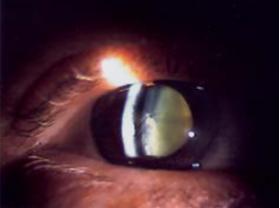
Cataract
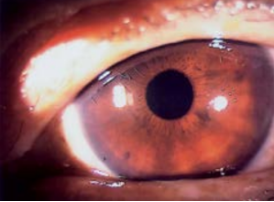
One Day after Surgery
Symptoms and Diagnosis
Symptoms
Vision becomes blurry in people suffering from cataract.They will see glare under sunlight or strong lights.Sometimes, they will see double or multiple ‘ghost’ images and colours may appear faded. Some presbyopes may find that they can read without reading glasses because their myopia has increased. They also notice that they cannot see distant objects clearly.
The lens becomes white when the cataract is mature and vision may deteriorate to the point of only perceiving hand motion or light. Hypermature cataract may lead to complications like glaucoma and uveitis, which may cause eye redness, eye pain, photophobia, headache, nausea and vomiting.
Below are some possible symptoms of cataract:
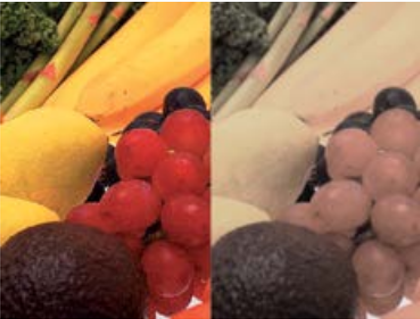
Colours loses their original tone

Vision becomes blurry in cataract patients
- Changes in eyeglass prescription
- Blurred vision
- Bad night vision that affects driving
- Glare or double vision with bright sun
- Dulled colour or yellowish vision
Diagnosis
An ophthalmologist can diagnose cataract clinically during a regular eye check-up, including the following items:
- Patients will read eye charts from a distance for the visual acuity test..
- Tonometry test to determine the pressure in the eye and slit lamp examination to assess cornea and anterior chamber.
- Pupil dilation allows the retina, maculae and optic nerve to be examined for signs of disease.
When a patient is diagnosed with cataract, the length of eyeballs and the curvature of corneas will be measured with Optical Biometry so the doctor can choose an appropriate lens implant for the patient.
Procedures and Treatments
Early cataract has little effect on vision, and no treatment is necessary. Changing your glasses prescription can sometimes restore vision if the cataract has induced a refractive change. When there is a significant decrease in vision that affects your work or daily life, cataract extraction should be considered. It is not necessary to wait until the cataract becomes mature.
There are no medications that can reverse the process of cataract formation. At present, cataract can only be treated with surgery and intraocular lens implantation.
Traditionally, cataract surgery employs a large limbal incision for the extraction of the cataract and implantation of an intraocular lens. The wound is then closed with very fine sutures. New minimally invasive cataract surgery uses an ultrasonic probe to remove the cataract through a tiny corneal wound, allowing for the implantation of a foldable lens. Usually, no suture or only one suture is required to close the wound, as thesmall incision is self-sealing. Surgery may be performed with topical anaesthesia or other forms of anaesthesiaas indicated .
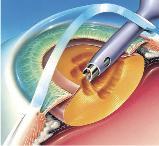
Ultrasonic phacoemulsification
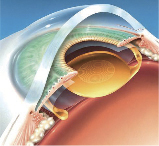
Implantation of foldable intraocular lens
As a result of the tremendous advances that have been made over the past decades, cataract surgery has evolved from large corneoscleral wound ECCE (ExtraCapsular Cataract Extraction) to small corneal stab incision surgery (phacoemulsification).
If you have nearsightedness, farsightedness, or astigmatism, the refractive error can be corrected with an appropriate intraocular lens. Presbyopia-correcting lenses enable patients to see distant, intermediate, and near objects clearly. Dependency on reading glasses will be eliminated or greatly reduced.
Depending on pre-operative planning and postoperative refraction, glasses or contact lenses may be needed to correct any residual refractive error.
After cataract surgery, the transparent capsule that supports the intraocular lens may become cloudy within one to two years. This cloudiness can blur vision. A laser capsulotomy can effectively address this issue. Clear vision is usually restored within a few minutes.
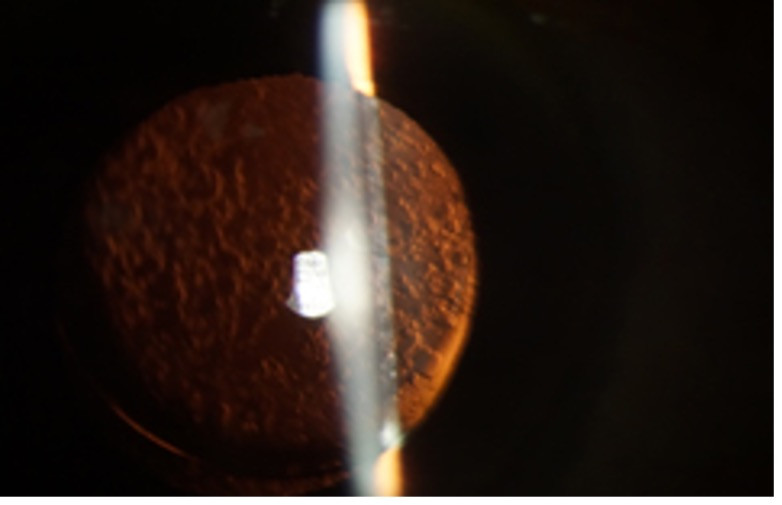
Before laser capsulotomy
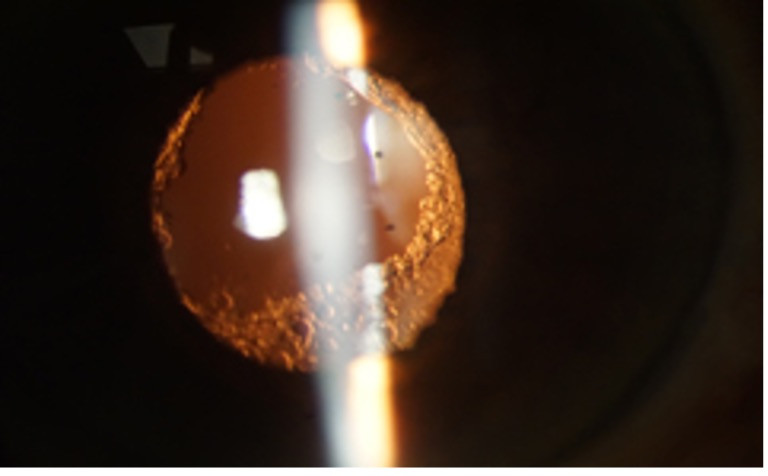
After laser capsulotomy
Contact Us

Happy Valley
- Address:
- 4/F, Li Shu Fan Block,
Hong Kong Sanatorium & Hospital,
2 Village Road, Happy Valley, Hong Kong
- Service hours:
-
Monday to Friday: 9:00 am - 5:00 pm
Saturday: 9:00 am - 1:00 pm
Closed on Sundays and Public Holidays
Consultation by Appointment
- Tel.:
- (852) 2835 8880
- Email:
- [javascript protected email address]
- Fax:
- (852) 2892 7510
- WhatsApp:
-
(852) 2835 8890
(For non-emergency cases)

Admiralty
- Address:
- 21/F, One Pacific Place,
88 Queensway, Hong Kong
- Service hours:
-
Monday to Friday: 9:00 am - 5:00 pm
Saturday: 9:00 am - 1:00 pm
Closed on Sundays and Public Holidays
Consultation by Appointment
- Tel.:
- (852) 2855 6700
- Email:
- [javascript protected email address]
- Fax:
- (852) 2523 7660
- WhatsApp:
-
(852) 2855 6700
(For non-emergency cases)

Admiralty
- Address:
- 21/F, One Pacific Place,
88 Queensway, Hong Kong
- Service hours:
-
Monday to Friday: 9:00 am - 5:00 pm
Saturday: 9:00 am - 1:00 pm
Closed on Sundays and Public Holidays
Consultation by Appointment
- Tel.:
- (852) 2855 6699
- Email:
- [javascript protected email address]
- Fax:
- (852) 2523 7660
- WhatsApp:
-
(852) 2855 6699
(For non-emergency cases)

Happy Valley
- Address:
- 6/F, Central Block,
Hong Kong Sanatorium & Hospital,
2 Village Road, Happy Valley, Hong Kong
- Service hours:
-
Consultation by Appointment
- Tel.:
- (852) 2835 8890
- Email:
- [javascript protected email address]
- Fax:
- (852) 2892 7538

Admiralty
- Address:
- 22/F, One Pacific Place,
88 Queensway Hong Kong
- Service hours:
-
Consultation by Appointment
- Tel.:
- (852) 2855 6700
- Email:
- [javascript protected email address]
- Fax:
- (852) 2892 7429